When the alarm goes, everyone needs the same picture.
Crises do not respect organisational charts. A fire in a terminal, a cyber attack on a booking system, a grounding, a total power failure in a port district — each one pulls in people who do not normally work together.
Honnimar is a cloud-based crisis and incident management platform built for the maritime industry. It gives your command centre and your external partners one shared, real-time operational picture — with the documentation, checklists and status log to back it up.
ISPS compliantISM alignedBuilt on Microsoft 365Online and offline access
Most organisations are good at one of these
Few are good at all three
Readiness
Plans that live in a filing cabinet are not plans. Honnimar keeps your emergency and continuity documentation structured, versioned and reachable from any device, so the procedure is available at the moment it is needed — including on a phone with no signal.
Response
A dashboard that shows the live state of the incident: what has been done, by whom, what is next, and what has changed since the last status. Action cards and checklists drive the response instead of relying on memory and phone calls.
Learning
Every action, decision and status change is logged with a timestamp. The log is your evidence base for the internal evaluation, the authority's questions and the next revision of the plan.
What Honnimar gives you
Built for the person in the command centre at 03:00
A command centre view
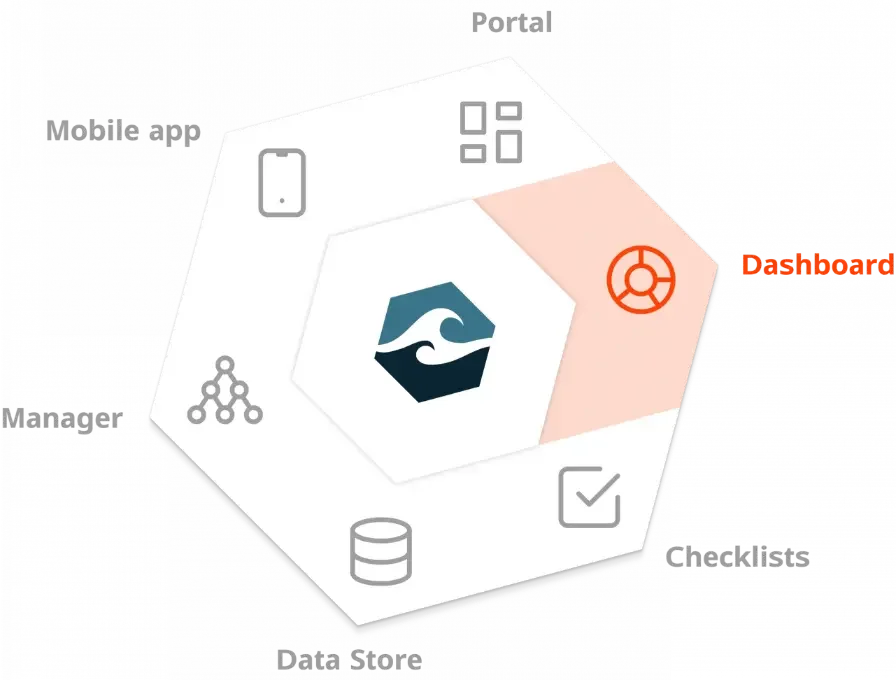
One dashboard for the crisis team. Ongoing events, critical information, assigned actions and a running action log showing every status change as it happens.
Action cards and checklists
Predefined response steps, inspection lists and safety checks that work on a phone. Date and time stamps, QR scans, free text and photographs — the checklist guides the person through the situation.
The people outside your organisation
The dashboard can be opened to external collaborators — police, fire service, environmental agencies, port authorities, agents — with either the full overview or a view tailored to what they need to see.
Status without the phone calls
The mobile app lets responders push status updates and progress reports directly into the incident, so the command centre is not the bottleneck.
Access anywhere, online or offline
Manual and protocol access from PC, tablet and phone. Offline capability means the plan still works in the places where infrastructure does not.
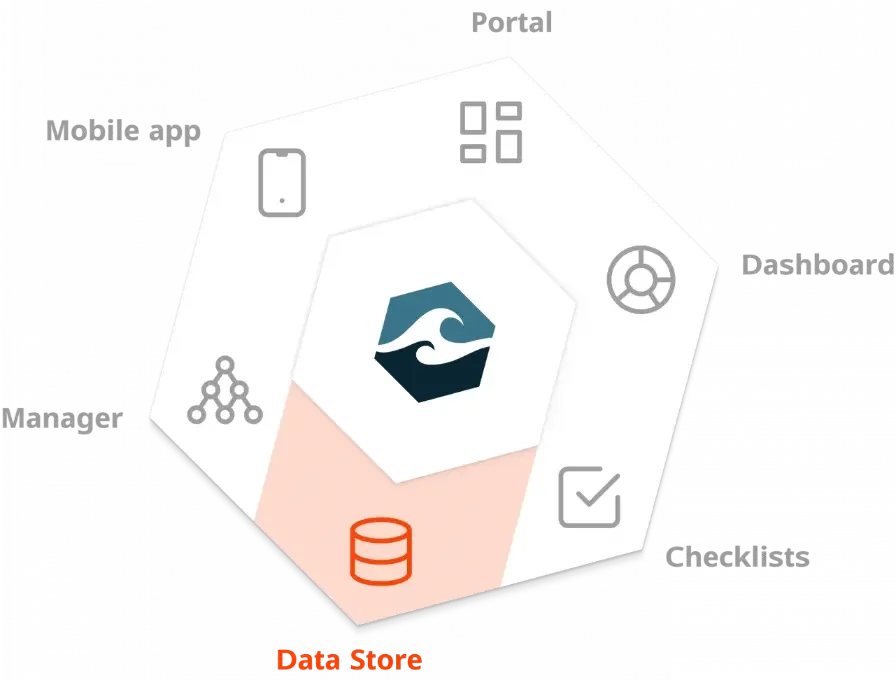
One data store, owned by you
Everything sits in a common data store in your own environment, keeping the door open for Power BI reporting, third-party integrations and AI assistance through Copilot or another compliant AI solution.
Regulation is a floor, not a ceiling
The ISPS Code sets the security framework, the ISM Code sets the safety management system, and both must be adapted to each individual port. Honnimar handles that adaptation as configuration rather than as a rewrite: documents structured hierarchically, one document able to cover several ISPS sites or a single one.
Multiple parties, multiple ships, one platform. Ports, shipping companies and maritime service providers work in the same environment with granular access control inside hierarchies. A user sees the part of the structure they are responsible for — and the crisis view they have been granted.
Compliance and practicality in the same tool. The system is built to meet current and future regulatory demands across ISPS, ISM and incident management, without turning compliance into a separate exercise performed for the auditor's benefit.
Digital sovereignty is a design choice, not a footnote
Honnimar is deeply integrated into Microsoft 365. That is a deliberate advantage: it sits inside the identity, document and collaboration environment your people already use, which is why adoption is fast and training is short.
It is also a question every serious buyer now asks. Our answer is that your data stays in your tenant, in your governance, under your keys — and we will walk you through the residency, access-control and exit options before you sign anything.
From exercise to real event
You cannot plan for every crisis. You can practise a wide range of scenarios and build the reflexes that transfer when something unforeseen happens. Honnimar supports both:
- Table-top exercises with the key decision-makers — a low-cost way to test communication, technology and procedures against likely and unlikely scenarios.
- Live exercises, where the platform carries the same checklists, action cards and dashboard as a real event, so nobody is learning the tool during the crisis.
- Evaluation, where the logged timeline and action history become the input to the revised plan.
Every exercise should end with the plan being updated. The platform makes the update cheap, which is what makes people actually do it.
Questions buyers actually ask
Software that supports the three phases of a crisis: preparation (plans, roles, documentation), response (a shared operational picture, assigned actions, checklists, status reporting), and recovery and learning (a timestamped record that feeds the next revision of the plan). Honnimar is that, specialised for the maritime industry.
No — and it is better if you do not. A crisis is when people need access to that documentation fastest. Keeping plans, checklists and the crisis dashboard in the same platform and the same document hierarchy means the plan is reachable from the incident, not from a separate system that nobody has open.
Yes. The dashboard can be extended to external collaborators such as police, fire departments and environmental agencies, with either the full overview or a view tailored to what that participant requires. Access is granular and controlled by you.
Offline capability is built in. Manuals and protocols remain accessible from the device, and checklist work continues; updates synchronise when connectivity returns. In a large-scale outage — exactly the scenario modern preparedness planning assumes — the plan is still available on the device in the responder's hand.
The system is implemented directly into your existing Microsoft 365 infrastructure and adapted to your needs in a shared process. Because it runs on the environment your people already use, user training is minimal by design.
No. Honnimar is built on Microsoft 365 and uses your existing identity, access and document governance rather than duplicating them.
Your data sits in your own tenant and in a common data store owned by you, under your Microsoft 365 controls and your access model. See the Digital Sovereignty page for the full position, including residency, key management and exit.
Yes. Because the data store is a common store you own, it is accessible to third-party applications — Power BI is the common example — and supports AI connectivity through Copilot or another compliant AI solution.
Both, in the same configuration. Running table-top and live exercises on the production setup is the point: nobody should be learning the tool during the real event. The logged timeline is then the input to the evaluation.
Three things: it is built for maritime realities including ISPS and ISM; external authorities and partners participate in the same platform rather than by phone; and the data stays in your own tenant under your governance.
Go deeper
Your next crisis is already scheduled. Your response should not be improvised.
Book a 30-minute online introduction and we will walk through a live crisis scenario in Honnimar — including how an external authority would see it.
Book a demo